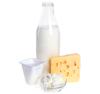
Calcium recommendations outlined in the Institute of Medicine’s Dietary Reference Intakes (DRI) report aim to help people achieve calcium balance and maintain good bone health.1 These recommendations are based on a comprehensive review of the scientific evidence. Adequate calcium is critical for building strong bones in childhood, achieving peak bone mass in young adulthood, and maintaining bone density to reduce the risk of fractures as we age.3
Recommended daily calcium intakes
The DRI report outlines recommended daily calcium intakes for different age groups as Recommended Dietary Allowances (RDAs):1
| Age Group | Recommended Dietary Allowances (RDAs) |
| 1 to 3 years | 700 mg/day |
| 4 to 8 years | 1000 mg/day |
| 9 to 18 years | 1300 mg/day |
| 19 to 50 years | 1000 mg/day |
| 51 to 70 years (men) | 1000 mg/day |
| 51 to 70 years (women) | 1200 mg/day |
| 71 years or older | 1200 mg/day |
The RDAs1 are similar to the World Health Organization (WHO) recommendations,4 that range from 1,000 to 1,300 mg of calcium daily for people 10 years and older, depending on life stage.
In practice
Calcium is essential for bone health throughout life,1,3 however far too many Canadians don’t get enough.2 Milk products are an important source of calcium, vitamin D, protein and other key bone building nutrients that help to:3
- Promote healthy growth and development in children
- Build peak bone mass in teens and young adults
- Maintain bone density in middle-aged adults
- Prevent frailty, falls and fractures in older adults
Calcium plays many vital functions
Calcium is the most abundant mineral in our body and every cell depends on it to function properly. Most of the body’s calcium supply, 99% is found in our bones and teeth, where it plays a key role in supporting their structure and strength.1 Calcium is also involved in many other vital functions such as the healthy regulation of blood pressure5 and heartbeat.6 According to the Institute of Medicine, calcium is needed for muscle function, vascular contraction and vasodilation, nerve transmission, signaling within the body’s cells and secretion of hormones.1 In addition, some studies suggest consuming adequate calcium as part of a balanced diet may play a role in supporting optimal weight management.7
Calcium is a nutrient of concern for Canadians
Health Canada has identified calcium as a nutrient of concern for Canadians because many do not get enough from the foods they consume.2 Calcium intake from food sources declined significantly over an 11-year period, resulting in widespread calcium inadequacy among Canadians.8 The decrease in Canadians’ dietary calcium intake between 2004 and 2015 is attributed to a decrease in milk product intakes.8
The prevalence of inadequate calcium intakes from foods is high in Canada, based on the Canadian Community Health Survey (2015) data.8
Prevalence of calcium inadequacy in Canada8
| Age group | Male | Female |
| 71+ y | 91% | 97% |
| 51-70 y | 64% | 94% |
| 31-50 y | 52% | 78% |
| 19-30 y | 44% | 73% |
| 14-18 y | 66% | 86% |
| 9-13 y | 73% | 82% |
| 1-8 y* | 42% | 42% |
Percent (%) below the Estimated Average Requirement (EAR)
Based on data from Canadian Community Health Survey 2015 for calcium intakes from food sources in Canadians not using supplements from Vatanparast et al.8
*Combined male and female.
The consequences of inadequate calcium intakes
Unfortunately, calcium deficiency often goes unrecognized until it’s too late. That’s because calcium is so vital that blood levels of calcium are tightly controlled to ensure they stay in the normal range. If we don’t consume enough calcium, our body will draw the calcium it needs from our bones. This weakens bones leaving them more vulnerable to fractures over time.
Without enough calcium, bones deteriorate over years without noticeable signs or symptoms until a bone is fractured. That’s why osteoporosis is known as the “silent thief” and is often said to be a pediatric disease with geriatric consequences.9 One in three women, and one in five men, will suffer from fractures due to osteoporosis in their lifetime.9 In fact, osteoporotic fractures are more common than heart attack, stroke and breast cancer combined.9
How milk products help meet calcium needs
Research shows that eating milk products such as milk, cheese and yogurt, which are reliable sources of calcium and other bone building nutrients, can make a real difference to bone health throughout life.3 According to the 2016 position statement from the U.S. National Osteoporosis Foundation, calcium, vitamin D and milk products are important for achieving peak bone mass in young adulthood, which is a key predictor of osteoporosis and fractures later in life.3 Eating three typical servings of milk products a day goes a long way towards meeting daily needs for calcium.
Calcium content of some common foods10
| FOOD | SERVING SIZE | CALCIUM (mg) |
| MILK PRODUCTS | ||
| Milk (whole, 2%, 1%, skim) | 250 mL (1 cup) | 310 |
| Cheddar cheese | 50 g (1.5 oz) | 337 |
| Mozzarella cheese | 50 g (1.5 oz) | 288 |
| Yogurt, plain | 175 mL (3/4 cup) | 272 |
| Yogurt, flavoured | 175 mL (3/4 cup) | 206 |
| Greek yogurt* | 175 mL (3/4 cup) | 170-500 |
| Kefir, plain | 250 mL (1 cup) | 267 |
| VEGETABLES (COOKED) | ||
| Bok choy | 125 mL (1/2 cup) | 84 |
| Kale | 125 mL (1/2 cup) | 49 |
| Broccoli | 125 mL (1/2 cup) | 33 |
| NUTS AND SEEDS | ||
| Almonds | 60 mL (1/4 cup) | 97 |
| Sesame seeds | 60 mL (1/4 cup) | 23 |
| LEGUMES (COOKED) | ||
| Edamame | 125 mL (1/2 cup) | 138 |
| White beans | 125 mL (1/2 cup) | 85 |
| Red kidney beans | 125 mL (1/2 cup) | 26 |
| Hummus | 30 mL (2 tbsp) | 12 |
| FISH | ||
| Canned sardines with bones | 75 g (2.5 oz) | 286 |
| Canned salmon with bones | 75 g (2.5 oz) | 212 |
| FORTIFIED FOODS | ||
| Calcium-fortified plant-based beverages† | 250 mL (1 cup) | 318 |
| Tofu, regular, firm or extra firm (prepared with calcium sulphate)‡ | 85 g (3 oz) | 171 |
*The calcium content of Greek yogurt varies according to the brand.
†Some plant-based beverages are fortified with calcium. The value presented is an average. However, they may not be a reliable source of calcium.
‡The calcium content of calcium-set tofu varies according to the brand and depending on the type of tofu.
References
- Institute of Medicine. Dietary Reference Intakes for calcium and vitamin D. Washington, DC: National Academy Press, 2011.
- Health Canada. 2016. Evidence review for dietary guidance: Technical report 2015.
- Weaver CM et al. The National Osteoporosis Foundation’s position statement on peak bone mass development and lifestyle factors: A systematic review and implementation recommendations. Osteoporos Int 2016;27:1281-1386.
- World Health Organization and Food and Agriculture Organization of the United Nations. Vitamin and mineral requirements in human nutrition – Second edition: Report of a joint FAO/WHO expert consultation, Bangkok, Thailand 21-30 September 1998. Chapter 4 Calcium – Table 4.2. Geneva, Switzerland: WHO/FAO. 2004.
- Villa-Etchegoyen C et al. Mechanisms involved in the relationship between low calcium intake and high blood pressure. Nutrients 2019;11(5):1112.
- Terrar DA. Calcium signaling in the heart. Adv Exp Med Biol 2020;1131:395-443.
- Ilich JZ et al. Role of calcium and low-fat dairy foods in weight-loss outcomes revisited: results from the randomized trial of effects on bone and body composition in overweight/obese postmenopausal women. Nutrients 2019;11(5):1157.
- Vatanparast H et al. Calcium intake from food and supplemental sources decreased in the Canadian population from 2004 to 2015. J Nutr 2020;150(4):833-841.
- Osteoporosis Canada. Fast facts. www.osteoporosis.ca. Accessed June 23, 2021.
- Health Canada. 2015. Canadian Nutrient File. https://food-nutrition.canada.ca/cnf-fce/index-eng.jsp. Accessed August 25, 2021.
- Chalupa-Krebzdak S et al. Nutrient density and nutritional value of milk and plant-based milk alternatives. Int Dairy J 2018;87:84-92.